Historical Background
This is one page of a multi-part series on “Trustworthy Technology,” detailing why we are so concerned about the subject. Much farther-reaching into the past than commonly realized, we’ve found the misuse of data (ostensibly innocently gathered) a given, which has run a thread though many of the darkest chapters in history. Why is that? Well…
Knowledge is Power
間
Yes, a truism described in antiquity (the last centuries of the Spring and Autumn period), and undoubtedly older. Dating from the fifth century BCE, wise master Sun Tzu sets the stage with a final chapter on intelligence and espionage in the famous military treatise The Art of War. The concept is mentioned in the Bible’s book of Proverbs (24:5) as well. Later, philosophers in the west such as Sir Francis Bacon would record the famous aphorism in Latin as, “ipsa scientia potestas est” in 1597.
Fear not, however. We’ll start our tour more recently, skipping ahead to the approach of the twentieth-century, narrowing our gaze to the late 1880s. Not at the birth of electronic computing as one might expect, but more specifically that of mechanized record-keeping—early databases in other words.
If you have you ever thought “I have nothing to hide,” well, the following pages should be illuminating.
The US Census of 1890 and the Hollerith Tabulating Machine
In the late 1800s, the United States was growing quickly and struggling to finish each decennial census (an every ten year population count mandated by its constitution), before the next one was to begin.
As luck would have it, the inventive Herman Hollerith came to the rescue with his new tabulating machine, which was ready to tackle the upcoming census of 1890. What is tabulation? In modern terms it means arranging data into a table (think spreadsheets). Back then punched cards (made of stiff paper) were invented to hold data. These machines assisted in cataloging, sorting, and summarizing personal information from the cards at a much higher rate than earlier manual processes. A combination that resulted in a census, “years ahead of schedule and far under budget.” Concretely, this meant 25% faster despite a 26% population gain. 🔗
The invention was so useful it spread far and wide across the globe within a few short decades. So far, so good. Significantly as we’ll see, Hollerith’s company was later merged with others and renamed to “International Business Machines,” (IBM for short) in 1924.
1930s, European Censuses
Subsequently, a number of censuses were held in Europe, including in Bulgaria, France, the Netherlands, and Poland, among others. The final census of the Weimar Republic (of Germany) also proceeded as planned, as well as those of the following government when it dissolved. As data gathering and reporting abilities improved, so did the scope of interesting questions. What did they catalog, pray tell?
This data collection contains electoral and demographic data at several levels of aggregation … for Germany in the Weimar Republic period of 1919-1933.
Additional variables provide information on occupations in the country… Other census data cover the total number of wage earners in the labor force…
Also provided is the percentage of the total population living in towns with 5,000 inhabitants or more, and the number and percentage of the population who were Protestants, Catholics, and Jews.
Details:
- Census in Germany, Weimar Republic Data, 1919-1933
- Similar proceedings in The Netherlands 🔗 , and Hungary 🔗
The inclusion of ancestry details was a focus for censuses later in the decade, and it became dark rather quickly from there.
1940s, World War II, IBM and the Holocaust
The drive to improve information technology intensified greatly in the desperation to win World War II. Enigma, heroic code breakers, and ENIAC were the wartime tech advancements we heard about almost exclusively during the 20th century, outside of weapons programs perhaps.
Yet there was an even darker side, quietly swept under the rug after the war. The details of which were finally uncovered in a book authored by Edwin Black and released in 2001. Titled IBM and the Holocaust; it was characterized as “explosive” by critics at the time. Incredibly, significant facets of this tragic and otherwise well-documented story were unknown to the public for sixty years. 🔗

Why yes, that does look like the eye of Sauron now that you mention it. 🔗
The part we knew, “The Final Solution” was genocide on an industrial scale. Millions were segregated, transported, then worked to death and/or murdered in camps. The sheer numbers of people involved however are startling enough that a few still do not believe them despite copious evidence and testimony.
The lingering question—how might (literal) execution at such an extraordinary magnitude be realized?
The answer is surprisingly mundane in today’s jargon—productivity
enhancement tools administered through numerous IBM subsidiaries,
predominantly
Dehomag
(a name meaning, German Hollerith Machines Company).
Black describes the missing pieces of the puzzle below:
After decades of documentation by the best minds, the most studied among them would confess that they never really understood the Holocaust process.
In this context “the process” means, the actual procedures day to day, where the rubber hit the road. Detailed questions arise:
How were they [the victims] selected? How did the Nazis get the names? They always had the names.
(P10) Suddenly, a squadron of grim-faced SS would burst into a city square and post a notice demanding those listed assemble the next day at the train station for deportation to the East. But how did the Nazis get these lists? For decades, no one has known. Few have asked.
(P425, Also…) What seemingly magical scheduling process could have allowed millions of victims to step onto train platforms in Germany (or nineteen other Nazi-occupied countries), travel for two and three days by rail, and then step onto a ramp at Auschwitz or Treblinka—and within an hour be marched into gas chambers? Hour after hour. Day after day. Like clockwork, with blitzkrieg efficiency.
The revelations follow. Conveniently, earlier European censuses furnished the details necessary to systematically apprehend newly anointed “enemies of the state” on an unprecedented scale. A current census was ordered and administered quickly in any new region occupied by the Reich.
These details were loaded onto punch cards, which could then be selected, sorted, and tabulated at high speed. Rail, locomotives, and train cars were inventoried and scheduled in a similar manner. Very few familiar with the tech at the time:
The survivors would never know. The liberators who fought would never know. The politicians who made speeches would never know. The prosecutors who prosecuted would never know. The debaters who debated would never know.
The question was barely even raised.
Indeed, “information technology” would not be a part of the zeitgeist or common vocabulary until half a century later, greatly obscuring the concept from investigators and hampering their ability to entertain such questions. Further, most card records were destroyed before liberation, while the expensive machines were promptly repossessed and put to profitable work after the war for reconstruction and management purposes.
Let it be known that only fifty years passed before database technology was used to automate and significantly accelerate a genocide—escalating it to history’s worst. The same clever “Hollerith machines” and cards, which sped up the census by an order of magnitude, that made modern train tables a reality, that organized an office, could also be turned to much darker use.
Now, it is not the fault of an “information processing system” that it was used in such a manner of course. Rather, the point being that databases enable a scaling of operations like few other technologies, making them uniquely productive, and uniquely dangerous in the wrong hands. Though the “why” of should-we-be-concerned is now clear, further clarity shall be found in following sections.
Details on IBM's profit motive and modern response.
After the Black’s work was published, the company that invented SQL stated that it has “no information” on the period. But it is well documented from numerous sources how IBM owned, micromanaged, and communicated frequently with Dehomag. It was Dehomag who did the data modeling for the cards used by the Reich themselves, printed the cards, leased all the machines, and serviced them with routine maintenance in the camps. As directed by NY, they also found numerous places to hide the incredible profits—from the Nazis and Uncle Sam—including real estate and Swiss bank accounts. None other than Watson himself visited frequently, until he no longer could. Even had dinner with you-know-who.
The truth? They knew everything, crushed any sign of competition, played both sides of the war and won, later to be hailed as heroes. IBM’s and Watson’s thirst for profit were unquenchable, as they would do literally anything for more. Difficult to think of worse, at least.
Now, you may be thinking to yourself, “Ok… the Nazis were one thing, but such evil could never happen in my country / liberal democracy ! ”
Unfortunately not…
1940s, Japanese Internment
In 1940, the US Census was again conducted as planned.
Despite prohibitive law and heartfelt assurances that the Census Bureau never shares private details for unauthorized purposes (and continues to make such promises), it has indeed provided that data when push came to shove. This time provided for the express purpose of rounding up Japanese-Americans for placement into interment camps during WWII. Specifically names, neighborhoods, and potentially addresses of targeted residents were delivered to authorities:
- Confirmed: The U.S. Census Bureau Gave Up Names of Japanese-Americans in WW II 🔗
- Secret use of census info helped send Japanese Americans to internment camps in WWII
Many lost everything they owned, beyond a suitcase or two. Another dark chapter, this time in a place that prides itself (delusionally perhaps) that such a thing could never happen there. More from Black’s book mentioned above:
The maps displaying Japanese population density were marked with dots, one for each ten persons. American and Dutch census bureaus simultaneously used Hollerith systems in 1943 to create racial “dot maps” as a means of organizing transfers to concentration camps. Hollerith experts dedicated to such projects seemed to work according to an established protocol on either side of the Atlantic, almost as though they had the same consultant.
—Edwin Black, IBM&TH (P345)
They did—IBM.
Again, you may be thinking to yourself, “Ok… well that was a long time ago, and during World War II to boot! It couldn’t happen today.”
… unfortunately not.
~1948-1994, Apartheid in South Africa
“Ain’t gonna play Sun City”—Artists United Against Apartheid, 1985
Apartheid (literally “apart-hood” in English), was a program of institutionalized racial segregation in South Africa during the latter half of the twentieth century.
IBM, having (not) learned from WWII, sought further revenue in the growing industry of identification and discrimination:
The national ID documents and their underlying computer systems were products that IBM specifically bid on contracts to produce and customize for the South African government. IBM software and hardware underpinned the racial classification system and population tracking that facilitated apartheid.
…after sanctions prohibited sales of the restricted goods to identified South African authorities, Defendants intentionally and repeatedly provided the means to carry out the violations…
In fact, IBM spent decades deceiving the U.S. authorities, actively opposing, and ultimately circumventing sanctions against the apartheid government.
Details:
- EFF… Seeks to Hold IBM Responsible for Facilitating Apartheid in Africa.
- Re: South African Apartheid Litigation
- Bantustan, forced relocation of native Africans to these “homelands.”
Note: It’s easy to kick IBM throughout this period, as they were so dominant, and we have. But as we’ll see in the next page, the “increase profits at any cost” disease has spread amongst most large corporations into modern times, today’s Big Tech in particular.
1950-1990, The Stasi Set Expectations
The Stasi (Ministry for State Security, pronounced “shtah-zee”) of the former state of East Germany made quite a name for themselves throughout the Cold War, also during the second half of the twentieth century. Pioneers in paranoia and surveillance they were, seemingly without bound:
It was one of the most repressive police organizations in the world, infiltrating almost every aspect of life in East Germany, using torture, intimidation, and a vast network of informants to crush dissent.
—Wikipedia/Stasi
Papers Please!
Let’s cut the computing industry some slack here, as the Stasi worked primarily in the analog domain. (They were well acquainted with the database, however.) We continue to be indebted to this tragic chapter of history. How?
Well… the Stasi demonstrated clearly how far a government will go to acquire, analyze, and yes use information against its citizens—and the answer, completely. During a time when it was an highly expensive endeavor compared to now.
In other words, Das Stasi didn’t push abstract or academic boundaries about what a government might do with surveillance, they rolled up their sleeves and got to work. In the real world, they toiled without rest, for forty years. No longer must we ponder theoreticals, dear reader.
- Aside: The important films, The Lives of Others and Balloon are focused on the era and discussed later on.
Now, you may be thinking to yourself, “Ok more recent, but South Africa and East Germany had particularly evil governments! Today, it’s only companies watching us.”
Not so fast. As we’ll see, fragile policy barriers are no match for an abundance of fear.
1980-2000, The “Good Old Days” Redux
One may want to review the section titled, “The Good Old Days,” if not read already. This was where computing industry developments through the period of roughly the late 1970s to the early 2000s were summarized.
In contrast to the rest of this page, the present and future were accidentally(?) quite bright for a while in the developed world of the late twentieth century.
((Record scratch…))
2001-09-11, War on Terrorism and The Program
Though many years in the making, the day our modern Uncle Sam (US govt.) truly lost the plot. Panic bulldozed principles quickly—in reaction to an enemy it barely understood.
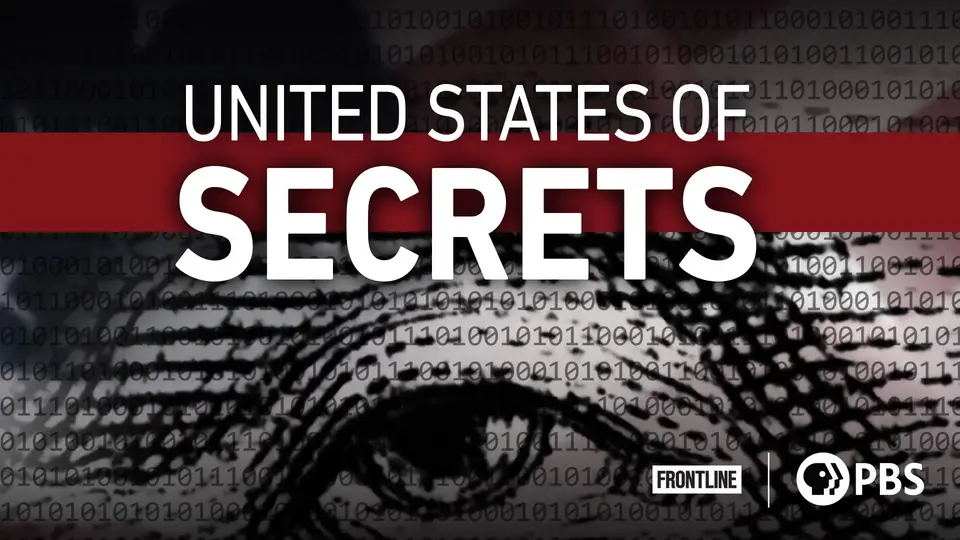
A must-see Frontline documentary (“free” to watch on Kanopy), named The United States of Secrets chronicles the breakdown of democracy and aggressive rise of surveillance during this time period, that the US government euphemistically called “The Program.” (Best said ominously in the voice of the Frontline narrator.) Highly recommended to understand the motivations of governments and their outsized role in dutifully marching us toward the coming dystopia.
This was also the decade where computer storage became so cheap that enterprise data is rarely deleted any longer, resulting in the rise of the so-called “soft delete.” Driven further by massive government spending perhaps.
After some time to reflect, a main takeaway from this event for this particular author is that, whatever safeguards or limits one might think exist in a government, are merely conventions. Constitutions, laws, policies… were simply abandoned for years after this event. Ultimately, “checks and balances” are powerless in an environment where everyone is afraid simultaneously. As someone who fondly studied milestones of democracy from Ancient Greece to the Magna Carta, Locke, Jefferson, French Revolution, and the US Constitution, this is a sobering realization of the limitations of principle and law under fire.
“Well, things must have calmed down after that.” …negatory.
2000s, Cisco Helps Build the Great Firewall of China
“An internal document … reveals that Cisco staff regarded the Chinese government’s rigid internet censorship program as an opportunity to do more business with the repressive regime.”—Wired
-
2008, Cisco Leak: ‘Great Firewall’ of China Was a Chance to Sell More Routers
-
2023, Ninth Circuit Allows Human Rights Case to Move Forward Against Cisco Systems
-
2025, How Silicon Valley tech enabled the surveillance and detention of hundreds of thousands in China, describes the surveillance and torture of minorities and religious groups.
Sound familiar? We’ll find that IBM is far from the only tech company with a thirst for profit without regard to consequences. Note that we’ve come full circle, back to the Art of War, twenty-five centuries later and not stopping.
2010s+, Snowden and the Five Eyes 👀👁👀
Dibs on that band name, eh? The Klein, Binney, Drake, Snowden (and other) whistle-blower disclosures allowed us a peek into how deep the government-surveillance rabbit hole goes. So far, it is bottomless:
Innovations include unprecedented global surveillance and query capabilities, the swapping of data between countries to bypass privacy laws and constitutions (Five Eyes), sabotage of encryption standards, secret courts security letters, and so much more.
By these criteria, our so-called benign modern governments have far surpassed the most evil of those in the twentieth century in terms of the breadth and depth of surveillance, all thanks to the march of technology.
The End of the Beginning
You might have thought to yourself a decade or so ago, “OK, now that everyone now knows about these dangerous surveillance programs, surely they’ll be reformed.” We ourselves hoped, naïvely. We now know the answer—unfortunately not.
Edwin Black chimes in again from IBM&TH with an imposing conclusion on the history of technology:
Mankind barely noticed when the concept of massively organized information quietly emerged to become a means of social control, a weapon of war, and a roadmap for group destruction. (P7)
Many of us have become enraptured in the Age of Computerization and the Age of Information. I know I have.
But now I am consumed with a new awareness that, for me, as the son of Holocaust survivors, brings me to a whole new consciousness. I call it the Age of Realization, as we look back and examine technology’s wake.
Unless we understand how the Nazis acquired their lists, more will be compiled against more people. (P16)
This was published seven months before September 11th on February 12th of 2001. Prescient and yet understated next to what happened in China shortly afterward and that detailed worldwide in the next pages. The story only picks up speed from here.